

Morocco rewards the traveller who goes slowly, asks the right questions, and trusts the right people. It punishes the one who rushes through the highlights on a packed minibus, eats at tourist traps near the main square, and spends the night in a camp they booked through an algorithm.
A luxury Morocco tour is not about spending more money. It’s about spending the same trip differently — with a local expert who knows which riad has the best rooftop in the medina, which road into the Sahara is empty at dawn, and which family in the Atlas still makes argan oil the old way and will invite you in for tea.
This guide covers everything you need to know to plan a tailor-made Morocco itinerary that goes well beyond what any package tour or booking platform can offer.
Why Private Tours Beat Group Tours in Morocco

Group tours exist because they are cheap to operate. Fifteen people in a minibus, a fixed route, pre-booked lunch stops at restaurants that pay commission to the guide, and a schedule that waits for no one. You will see Morocco through glass, at speed, with strangers.
A private Morocco tour works differently from the first moment. Your driver picks you up from your hotel at the time you choose. You stop where you want. If you spend an extra hour in the Fes tanneries because the light is perfect, you stay. If you want to skip the tourist souk and walk the residential neighbourhood instead, you walk.
The practical differences compound quickly:
- Pace — you move at your speed, not the group’s slowest member
- Access — a local driver opens doors a group tour never reaches: family homes, craftsmen’s workshops, off-piste mountain roads
- Flexibility — if you fall in love with a town and want to stay an extra night, you stay
- Privacy — the Sahara at sunrise with your travel companion, not with fourteen strangers taking the same photograph
- Local knowledge — restaurants, riads, and experiences chosen for quality, not for the commission they pay
Morocco is one of the most hospitable countries on earth — but that hospitality reveals itself slowly, to people who are present and unhurried. A private tour gives you the conditions to actually receive it.
Best Time to Visit Morocco
Morocco has distinct regions with different climates, so “best time” depends partly on where you’re going. As a general rule, the two sweet spots are March to May and October to November.
Spring (March–May) brings wildflowers to the Atlas foothills, comfortable temperatures across all regions (15–25°C), and manageable crowd levels before the summer peak. The Sahara is warm by day and cool at night — ideal for desert camps.
Autumn (October–November) is arguably the strongest window. The summer heat has broken, the light is golden and low, and the desert is at its best. Marrakech and Fes are busy but not overwhelmed. November in particular offers exceptional conditions at very competitive rates.
July and August are possible — Marrakech and the Atlantic coast are popular with Moroccan families — but the desert is extreme (surface temperatures above 50°C by midday) and the imperial cities are crowded. If you travel in summer, base yourself near the coast and plan Sahara visits for another trip.
December through February brings cold nights, snow on the High Atlas, and near-empty medinas. Fes and Marrakech are beautiful in winter light, and the desert is crisp and clear. This is an underrated window for a bespoke Morocco holiday if you don’t mind packing an extra layer.
Top 5 Destinations to Include in Your Morocco Itinerary
1. Marrakech

Marrakech is the entry point for most visitors, and for good reason — it is one of the most visually arresting cities in the world. The medina, a UNESCO World Heritage Site, is a labyrinth of souks, palaces, and neighbourhood mosques that rewards getting lost in. The Djemaa el-Fna square transforms from a fruit-juice market in the morning to a carnival of storytellers, musicians, and food stalls by evening.
Most visitors stay one or two nights. The right answer is three, with a private guide for at least one full day. The difference between a solo wander and a guided walk through the medina is the difference between looking at a painting and having the painter explain it to you.
Where to stay: the best riads in Marrakech are hidden behind unmarked doors in the northern medina. They cost the same as a mid-range hotel and offer a completely different experience — courtyard fountains, rooftop terraces, and staff who know the neighbourhood. We can recommend the right one for your travel style and budget.
2. Fes

Fes el-Bali is the oldest continuously inhabited medieval city in the world. Its medina has been largely unchanged since the 9th century — no cars, no straight lines, over 9,000 streets. First-time visitors frequently describe it as overwhelming. With the right guide, it’s the most extraordinary place in Morocco.
The Chouara tannery — where leather has been dyed in the same stone vats since the 11th century — is one of those rare sights that photographs cannot adequately prepare you for. The Bou Inania Madrasa, the Andalusian quarter, the ancient foundouks (caravanserais) converted into artisan workshops — all of it requires someone who knows where to walk and what to look for.
Fes deserves two full days minimum. Many travellers who plan one night end up extending. Plan for the possibility.
3. The Sahara — Merzouga and Erg Chebbi
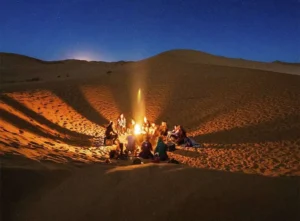
The Erg Chebbi dunes near Merzouga are the defining image of Moroccan travel — and the reality matches the photograph. The dunes rise to 150 metres, shift from terracotta to gold to deep orange depending on the light, and stretch for 22 kilometres with no roads, no fences, and almost no sound.
The difference between a good Sahara experience and an extraordinary one is almost entirely about where you sleep. Basic group camps are serviceable; private Sahara desert tour camps with en-suite tents, proper beds, and a full traditional dinner under the stars are in a different category entirely.
Getting there is half the experience. The southern route from Marrakech via Tizi n’Tichka, Aït Benhaddou, Ouarzazate, and the Draa Valley is one of the most scenically varied drives in North Africa. A private driver-guide turns it into a day-long education in Moroccan landscape, history, and architecture.
4. The Atlas Mountains

The High Atlas is Morocco’s backbone — a range that runs 2,400 kilometres and reaches over 4,000 metres at Toubkal, North Africa’s highest peak. Most visitors pass through on the way south. The ones who stop discover something exceptional.
The Ourika Valley, an hour from Marrakech, is dotted with Berber villages built directly into the hillside, waterfall walks, and weekly markets where mountain families sell produce and crafts. The Ait Benhaddou ksar on the southern slopes is one of the finest examples of earthen architecture in the world, used as a film set for everything from Lawrence of Arabia to Game of Thrones.
For walkers and trekkers, the Atlas offers multi-day routes through valleys where nomadic families still move with the seasons. A private guide who speaks Tachelhit (the local Berber dialect) opens those valleys in a way no group tour can.
5. The Atlantic Coast — Essaouira and Beyond

Morocco’s Atlantic coastline is the country’s best-kept secret for most international visitors. Essaouira, a whitewashed walled city on the coast three hours from Marrakech, is everything the interior is not: breezy, unhurried, and free of the hard sell that follows tourists through the medinas further east.
The city has a long history as a trading port between Africa and Europe, a Jewish quarter that dates to the 18th century, and a surfing scene that draws visitors from across the continent. The ramparts, the fishing harbour, and the argan oil cooperatives run by local women’s associations are the highlights.
Combining Essaouira with Marrakech and the Atlas as a three-night extension to a southern itinerary is one of our most popular arrangements for travellers who want to see Morocco’s full range.
For golfers, Morocco offers world-class courses from Marrakech to Agadir, with Atlas Mountain backdrops and year-round sunshine. Explore our Morocco golf tour packages — private arrangements for individuals and groups of all handicap levels.
What Luxury Actually Means in Morocco
Luxury in Morocco is not about international hotel chains and standardised service. It is about the quality of the local experience — and that quality is available at a range of price points that would surprise most travellers used to European costs.
Private Guides
A licensed, knowledgeable local guide is the single highest-return investment in a Morocco trip. In Fes, the difference between navigating the medina alone and walking it with someone who grew up there is incalculable. In the Sahara, a guide who speaks the local Hassaniya dialect and knows the desert by starlight is a different category of experience from a driver who drops you at the camp gate.
All our guides are locally born, formally trained, and chosen specifically for the region they cover. We do not use one generalist guide for all of Morocco.
Riads
The riad — a traditional Moroccan townhouse built around an interior courtyard — is the correct answer to accommodation in the imperial cities. The best ones are small (four to eight rooms), meticulously restored, staffed by people who live in the neighbourhood, and priced comparably to a mid-range chain hotel.
Booking a riad through a general platform gives you a room. Booking through a local operator who knows the owners gives you a home base in the medina, with recommendations for everything from where to have breakfast to which hammam is worth going to and which to avoid.
Sahara Camps
Not all Sahara camps are equal. The standard group offering is a shared Berber tent with thin mattresses, a communal bathroom block, and dinner that was cooked in bulk for fifty people. Functional, but not extraordinary.
A private luxury camp is a different experience: your own tent with a proper bed and en-suite bathroom, dinner prepared for your group, live Gnawa music around the fire, and a guide who wakes you before dawn to reach a dune crest before the first tour groups arrive. The price difference is smaller than most people expect — and the experience difference is total.
Personalised Service
The clearest marker of a genuinely tailor-made Morocco itinerary is that someone in Marrakech knows your name before you land. Your driver has your flight number. Your riad has your dietary preferences. The desert camp knows you requested a private tent away from the main group. None of this happens through a booking platform — it happens because a local team has built the trip around you specifically.
Why a Local Operator Beats GetYourGuide, Viator, and Every Other Platform
Booking platforms have their place. For a two-hour cooking class or an airport transfer, they are efficient and reliable. For planning a luxury Morocco tour across multiple cities, terrains, and accommodation types, they are the wrong tool.
Here is what a platform cannot give you:
- Curation — platforms list everyone who pays to be listed. A local operator recommends only what they have personally used and trust.
- Flexibility — if your flight is delayed, your camp reservation needs to move, or you want to extend a night somewhere, a platform has a cancellation policy. A local operator has a phone number and a network.
- Local knowledge — the best riad in Fes is not the one with the most reviews on a travel site. It is the one a Fes local recommends to someone they want to impress. That recommendation is not available on any platform.
- Accountability — when something goes wrong on a group tour booked through a platform, you are a ticket number in a queue. When something goes wrong on a trip booked with a local operator, you call a person who is invested in your experience.
- The long view — a platform’s incentive is to process your booking. A local operator’s incentive is for you to come back, and to tell your friends. Those are not the same incentive.
Travel Ease Morocco is a Marrakech-based team that has been planning private tours in Morocco for over a decade. We are not an aggregator, a franchise, or a platform. We are local people who know this country well enough to be honest about what is worth your time and what is not.
How to Start Planning Your Luxury Private Tour
The most useful thing we can do for most enquiries is a short conversation. Tell us your travel dates, who you’re travelling with, which parts of Morocco interest you most, and roughly what you want to spend — and we will come back to you within 24 hours with a tailored outline itinerary and a transparent quote.
There is no obligation, no deposit required to receive the proposal, and no pressure to book. We would rather spend time getting your itinerary right than close a sale on something that does not fit.
If you already have a rough idea of what you want, we can work from that. If you want us to build something from scratch based on your travel style, we can do that too. Either way, the conversation is the right place to start.
FAQ
How much does a luxury private tour of Morocco cost?
It depends on duration, group size, and accommodation level — but a well-designed private Morocco tour for two people, covering Marrakech, Fes, and the Sahara over 8–10 days, typically falls between €1,800 and €3,500 per person including accommodation, private transport, and guided experiences. That range covers a wide spread of quality; we can advise on where to concentrate your budget for the best return.
Is Morocco safe for private travel?
Morocco is one of the safest travel destinations in Africa and the broader Mediterranean region. The main risks for visitors are petty theft in crowded medinas and the minor frustrations of unsolicited “guides” in tourist areas. Both are easily managed with the right local support. Travelling with a reputable private Morocco tour operator effectively eliminates both.
How long should a first Morocco trip be?
Ten to twelve days is the right length for a first trip that includes Marrakech, Fes, and the Sahara. Shorter is possible but feels rushed — Morocco rewards time. If you only have a week, we would recommend focusing on two regions rather than racing through three.
Do I need to speak French or Arabic?
No. Your guide and driver will handle all language needs throughout the trip. French is widely spoken in cities; Darija (Moroccan Arabic) and Tachelhit (Berber) in rural areas. English is increasingly common in Marrakech and the main tourist centres. You will get by without any additional language preparation.
Can you arrange a Morocco trip for a special occasion?
Yes — anniversaries, honeymoons, milestone birthdays, and small group celebrations are among our most common requests. The Sahara in particular lends itself to private, memorable occasions. Tell us what you have in mind and we will build something around it.
Ready to plan your luxury Morocco tour? Contact the Travel Ease Morocco team — tell us your dates, group size, and what kind of trip you’re imagining. We’ll send you a tailored itinerary and quote within 24 hours.